This is a clone of the Frantone peach Fuzz. The signal chain is something like:
In –> op-amp –> LM386 –> LM386 –> BMP Style Tone Control –> Out
My first build sounded great but, I had forgotten the power pins on the op-amp, so the PCB required some jumpers to get working. This second version of the PCB fixes that problem, and everything is working great.
This sounds really good! You should build one today! And there are no hard to find parts.
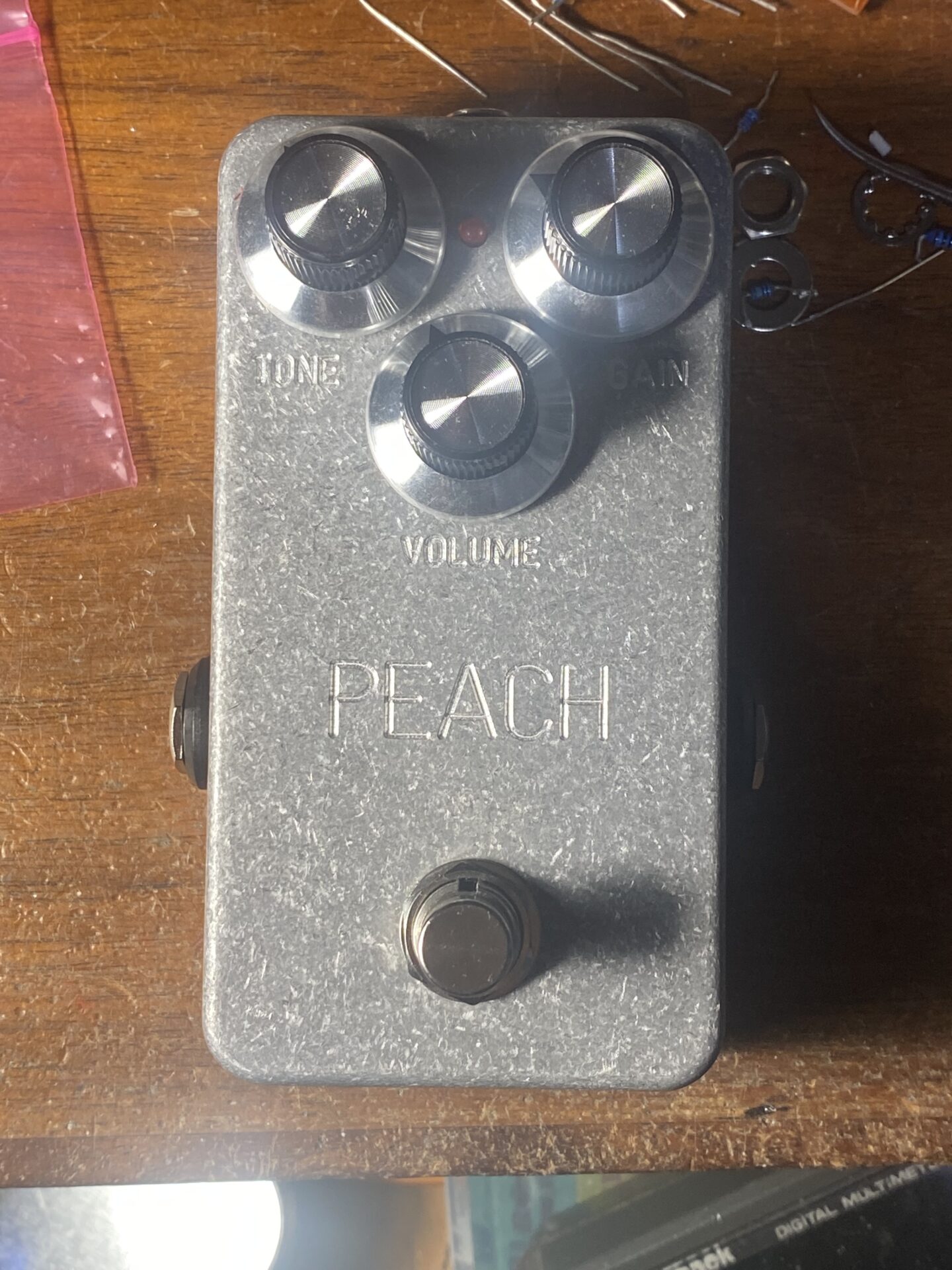
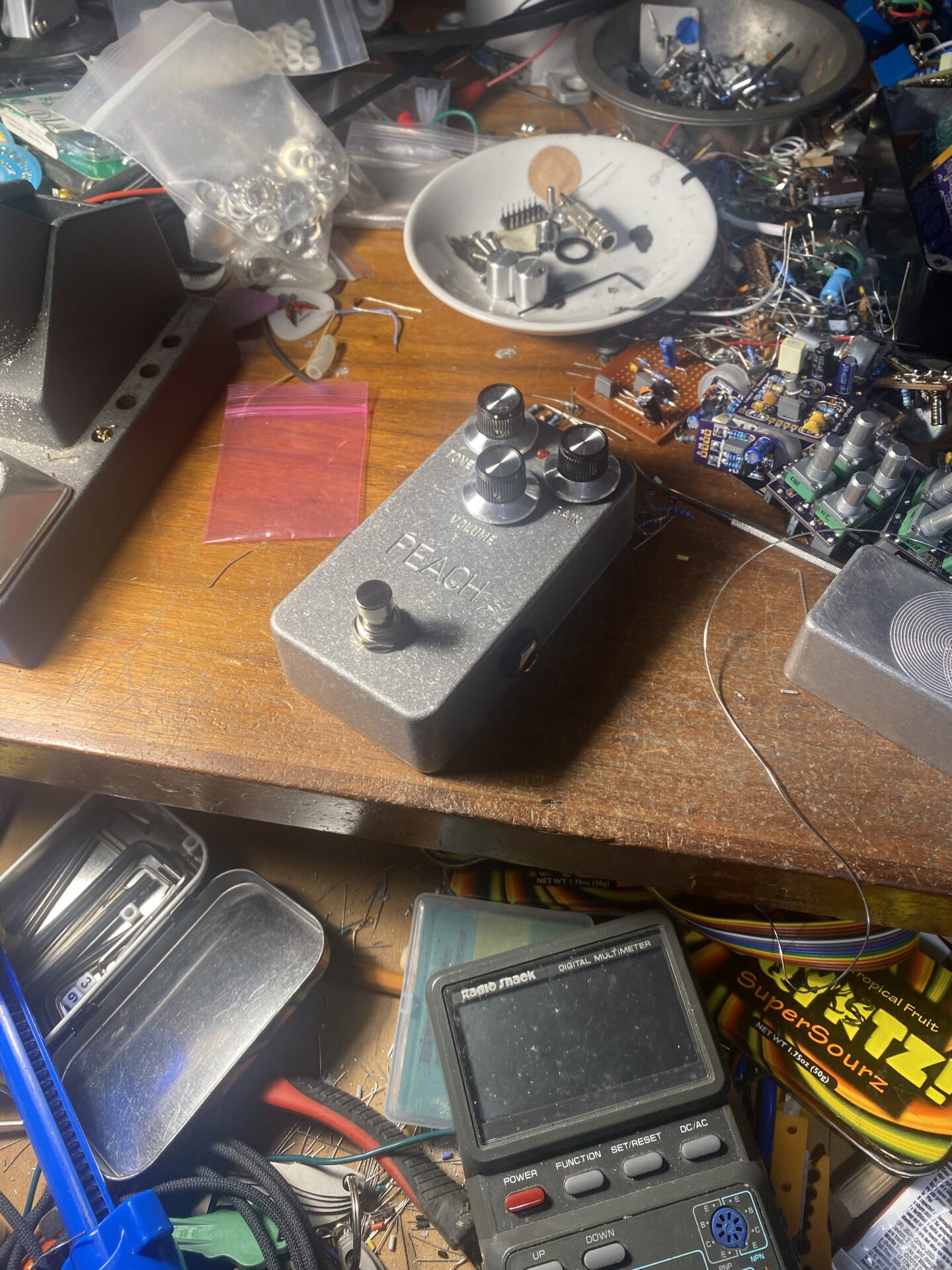
The style for this years pedals is bare metal enclosures with engraved markings in clean industrial typography. Clean and utilitarian. Something you can step on with your foot, and you’re not worried about scratching the paint, or resale value. LEDs are red 3mm. I might apply some black Sharpie to the lettering or I might not, it hasn’t happened yet.


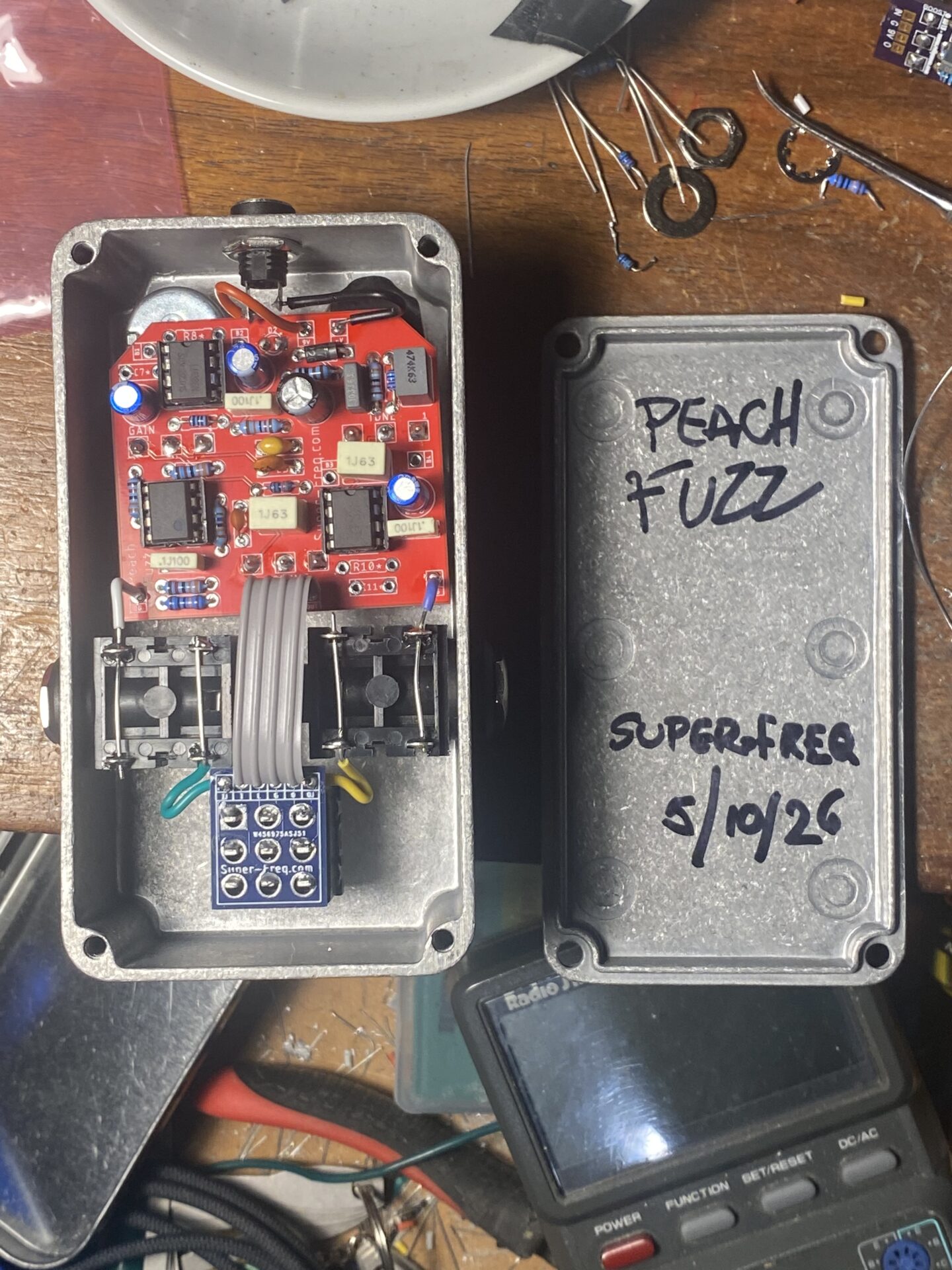
Notice there are a few components missing from this PCB. The application notes for the LM386 show some extra parts recommended for stability. I put these on the board but didn’t populate them, C7*, R8*, R10*, and C11*. I used these on the first Peach Fuzz build. I compared the sound of the two and can’t hear any difference. I don’t think the originals included these parts.


There are of couple extra pads near of the LM386s. These connect to pin 1 and 8 of the chip. You can bridge these to bump the gain up to 200, connect these with a pot to make the gain adjustable. There are a few schemes you can use to make the gain adjustable. The default gain is 20. It was easy enough to add the pins. I figure I can experiment with these in the future.
The original Frantone Peach Fuzz leaves these unused, and it sounds great. The two LM386 have a gain of x20 into a another x20 for a total of 400. The input stage drives the first stage with a gain of around x5. Increasing the gain of one or both of the 386 stages to 200 seems over kill.
That said, the Acalupco Gold by EarthQuaker Devices uses two LM386, like the Peach Fuzz, the first stage is configured with a gain of x200. I’ve never owned one of these but have heard some good sounds from demos. Maybe there are more sounds in there to be explored.